

Risk Assessment
August 02, 2021
Monday, August 2, 2021


Saturday, July 31, 2021
Notes
July 31, 2021
Loss Causation Theories
Loss Causation Theories
The basic duty of the safety officer at any workplace is to keep the record of the accidents and investigate them to ensure they don't occur again. In some countries it is legal requirement to report certain diseases and accidents. Sometimes, the information required to investigate the incident is not sufficient for investigation and there is no possibility to stop the reoccurrence using the available information.
The basic and good starting point in any investigation is to consider two basic theories behind the accident occurrence.
- Single Cause Domino Theory
- Multi Causal Theory
- System's Theory
- Single Cause Domino Theory
In 1930, Herbert William Henrich (H. W. Henrich), an American Industrial Safety Engineer stated that;
"A Preventable accident is one of five factors in a sequence that results in an injury. The injury is invariably caused by an accident and the accident in turn is always the result of the factor that immediately precedes it".
The five factors from the Henrich's model are shown below;
|
Henrich’s Accident Model |
|
|
Factor |
Description |
|
Ancestry & Social Environment |
Undesirable
traits of character e.g., stubbornness, greed, recklessness, that may be
passed along through the inheritance. Environment
in which a working is used to work, may develop undesirable traits of
character or may interfere with education, Both
inheritance and environment have ability to produce faults. |
|
Fault of Person |
Inherited
or acquired faults constitute reason for committing unsafe acts or for the
existence of mechanical or physical hazards. |
|
Unsafe Act/ Mechanical Hazard/ Physical
Hazard |
Unsafe
performance of persons such as standing under the lifted load, careless starting
of machine, removal of safeguard, horseplay, mechanical hazards or physical
hazards result in accident. |
|
Accident |
Events
such as fall of person, fall of load onto the person stand underneath, hit by
flying objects or moving machinery parts, such accidents occur. |
|
Injury |
Fractures,
joint dislocation, cuts, etc., are the injuries which result directly from
accident. |

Henrich makes a vital point in his theory that the "A preventable injury is the natural culmination of a series of events or circumstances which occur in a fixed logical order".
For Example:
If you put few dominos in a line one after another, and then push the one, it will cause the next one to fall and so on throughout the series. The chain of the events can be halted by removing the anyone domino.
In the same way, Henrich's model works, if one of these factors is eliminated and the occurrence of the injury can be prevented and accident will not take place.
In these series of events, the most easiest factor that can be removed is the number 3, Unsafe Act/ Mechanical Hazard or Physical Hazard.
Bird & Loftus
In 1976, Bird and Loftus extended the original Domino Theory presented by the H. W. Henrich and added the influence of the management in the cause and effect of accidents, suggesting a modified chain of events.
Model of the Bird and Loftus included the following sequence;
- Lack of controls by management.
- This permits the existence of basic cause.
- Basic cause leads to immediate cause
- Later these are direct cause of accident
- Final result is loss
- Multi Causal Theory
There may be more than one cause of an accident, not only in a series but occurring simultaneously. For example, a Methane (C4H4) requires following 3 elements; Methane Gas within explosive range of 5% to 15%, Oxygen and Ignition source.
The ignition and explosion will occur only if these 3 are present together. The presence of each of these 3 elements in a workplace can be the result of any other event occurred earlier.
In accident investigation, all causes must be investigated. Simple accidents have single cause that's the reason simple events occur more frequently. The severity of these events is minor to moderate.
Catastrophic events involve multiple factors and has multiple causes that's why they occur rare but have catastrophic result.
Multi Casual Theory also considers that there may be organizational, cultural, managerial, social causes that interact and lead to accident. This model is more complex than the single causal model and requires a lot of experience when investigating the cases. The investigation process becomes the complex too.
Systems Theory
This is another way of looking at a multiple causal model.
The process and factories can be assumed as a system, i.e., in an assembly plant, many parts and components are connected together to execute a job, with inputs and outputs in the presence of various control mechanisms.
System approach is used to simplify the complex system and part of the system can be used as a black box. System failures are reduced with prevented or minimised with the help of components which can't fail, by installing backup system, and redundancy.
Redundancy is putting extra components so that they takeover if the first one fails without interrupting the operation.
 |
Failure of Multiple Causation Approach
These causes are divided into 3 further categories including Immediate Cause, Underlying Cause, and Root Cause, as well as Unsafe Act & Unsafe Condition is also discussed to check the reason behind any accident.
The above mentioned theories can be combined with advance incident investigation techniques including Fall Tree Analysis, Event Tree Analysis, Root Cause Analysis etc.

Friday, July 30, 2021

Notes
July 30, 2021
An Introduction to Material Safety Data Sheet MSDS
What is Material Safety Data Sheet?
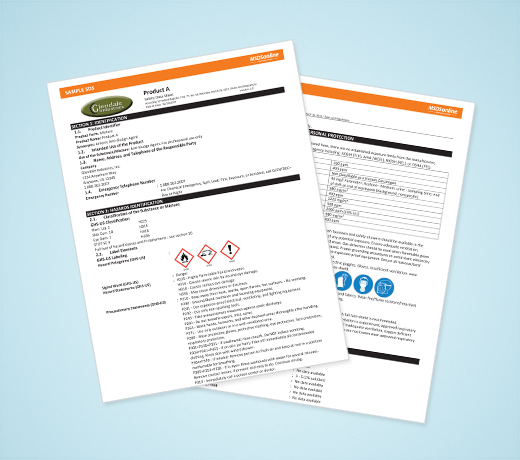
A Material Safety Data Sheet (MSDS), Safety Data Sheet (SDS), or Product Safety Data Sheet (PSDS) is a formal written document that lists the information relevant to Health and Safety for the use of any kind of substance and material.
It must be remembered that it is not a risk assessment but it is a source or method of communicating the hazards of the product and how to use them, by manufacturer to end user. The MSDS consists of the 16 sections and each section is bound to deliver the thorough information about the product.
Basically, the MSDS contains information like basic properties of the substance, physical and environmental hazards,
Legal Requirements
By law a manufacturer is bound to prepare the MSDS of the product he is developed and supplying in the market. On the other hand, an employer introducing the material in the workplace is bound by law to review it, make preparations and emergency planning to counter any emergency situation when the substance is being used at the workplace.
Globally Harmonized System of Classification & Labelling of Chemicals (GHS)
Globally Harmonized System of Classification & Labelling of Chemicals is a globally accepted system about the structure of the Material Safety Data Sheet and what information should be covered in the sheet.
In the MSDS of any chemical, the Section 12 to Section 15 ensures it is consistent with United Nation's Globally Harmonized System of Classification & Labelling of Chemicals.
The following are the 16 sections of the Material Safety Data Sheet;
|
Section 1: Identification |
|
|
Section 2: Hazards Identification |
|
|
Section 3: Information on Components/Ingredients |
|
Substances
Mixtures
|
|
Section 4: First Aid Measures |
|
|
Section 5: Firefighting Measures |
|
|
Section 6: Accidental Release
Measures |
|
|
Section 7: Handling and
Storage |
|
|
Section 8: Exposure Control
& Personal Protection |
|
|
Section 9: Physical and
Chemical Properties |
|
|
Section 10: Stability
& Reactivity |
|
|
Section 11: Toxicological
Information |
|
|
Section 12: Ecological
Information |
|
|
Section 13: Disposal Consideration |
|
|
Section 14: Transportation Information |
|
|
Section 15: Regulatory Information |
|
|
Section 16: Other Information |
|
Thursday, July 29, 2021
Wednesday, July 28, 2021

Tuesday, July 27, 2021
Safety
July 27, 2021
Rainy Season and Escape from Lightening Strike
Rainy Season and Escape From Lightening Strike
In South Asia, rainy season or Monsoon has started and these days many incidents occur. Due to negligence of people, they loose their life. One thing should be remembered by everyone that when it is rainy season or severe weather in normal days, seek shelter instead of staying outside.

30-30 Rule
If you see lightening, count the time till the roar of the thunder is heard. If the time between lightening and thunder roar is 30 second or less, seek shelter immediately because the thunderstorm is close enough to be dangerous.
If you haven't seen lightening after first one, wait for 30 minutes before leaving the shelter. Many deaths occur even after the storm has passed.
Protection Against Lightening Strike
Lightening Strike can be avoided by adopting few simple steps. These steps vary according to the location whether you are indoor or outdoor.
|
|
Outdoor Safety Measures |
Indoor Safety Measures |
|
Do |
Be aware of the
weather forecast. If there is any chance of thunderstorm, avoid all outdoor
activities and trips. Seek shelter and
ensure readily available shelter is available. Shelter includes, offices,
buildings, homes, hard-top car with windows rolled up. If you are caught outdoor
and there is no shelter nearby, keep yourself close to ground by getting off
elevated areas, hills, ridges etc. Never shelter under an
isolated tree. Never lie flat on
the ground. Crouch down, tuck your head and keep hands on ears and move forward.
Get out of ponds,
lakes, pools and go indoor. Stay away from metal
bodies and objects that conduct electricity. If
you are in group, separate and maintain distance. It will reduce the injuries
severity. |
Stay Indoor when it
is severe weather outdoor. Follow
30 – 30 rule and ensure you get out of shelter when the weather is clear. |
|
Don’t |
Don’t stay in the
open surface vehicles and spaces. Don’t
lie on the concrete floor or lean against concrete wall. Lightening can
travel through any metal to concrete wall or floor. |
Avoid water. Don’t wash
any kind of dishes, don’t take bath or any other activity which involves
water usage. The lightening can travel through the plumbing service of a
building. Don’t use any
electronic equipment and tools. The electricity can travel trough it and you
can be electrocuted. Avoid concrete walls
because the electricity can travel through metal bars, or any thing metal
object and electric shock is possible. Don’t use corded
phones. Use of cordless and cellular phones during thunderstorm is safe. Avoid
touch or standing nearby windows, doors, stairs because electricity can pass
through these conducting metals. |
The below picture indicates how to move towards shelter if you are caught outside and keeping yourself close to ground to reduce the risk of lightening strike.

Medical Assistance & First Aid for Lightening Victims
If there is someone who has been struck by lightening, adopt 4 step strategy to save his life.
The main aim of First Aid is;
- Prevent Deterioration
- Promote Recovery
- Save Life
Call for Help
Immediately inform the emergency services and share all details like type of casualty, home #, address and current state of patient.
Situation Assessment
Before starting any rescue assess the situation. The victim can be in danger zone despite getting hit by the lightening. The rescuer can get victim too. Assess the situation and remove the victim from danger zone. Any action can put the lives of the victim and rescuer in danger.
Respond
Once the victim has been removed and is in safe location, check if the victim if ok, breathing or not. Mostly, lightening causes heart attack. This can be checked by feeling the pulse of Carotid Artery which is found on our neck right under the jaw.
 |
| Checking Pulse by Inspecting Carotid Artery |
Resuscitate
If the patient is not breathing, immediately start mouth-to-mouth resuscitation to restore his internal respiration. If the patient doesn't have pulse, start the Cardiac Compression. Keep Resuscitate and Cardiopulmonary Resuscitation (CPR) going on, until the help arrives. Keep in mind, the victim lying on the ground can lead to hypothermia if the area is hot or cold. Put a layer of clothes between ground and victim as protective layer.
 |
| Mouth-To-Mouth Resuscitation |
 |
| Cardiopulmonary Resuscitation - CPR |

Monday, July 26, 2021

Saturday, July 24, 2021
Notes
July 24, 2021
Immediate Causes vs Underlying Causes vs Root Causes & Unsafe Act vs Unsafe Condition
Immediate Causes vs Underlying Causes vs Root Causes & Unsafe Act vs Unsafe Condition
Accidents occur at the workplace due to a lot of reasons and their investigation as well as implementation of necessary control measures is necessary to prevent the further occurrence. For this purpose, establishing the cause of the accident is a fundamental part of investigation.
The reasons/causes behind an accident are often divided into 3 categories mentioned below;
- Immediate Cause
- Underlying Cause
- Root Cause

The above mentioned terms may vary but the most important thing here is to look beyond the consequences and symptoms of the accident. Being an HSE Professional/ Incident Investigator it is necessary and first priority to dig deep and discover that why the accident occurred or why it was allowed to take place? Usually, the accident occurs due to a chain of event occurring in a series or chain. Each event triggers the next event and this process goes on until the accident takes place.
Immediate Cause
It is the Direct Cause of the accident. e.g., the actual agent of the injury or damage, such as the sharp blade of the machine.
Underlying Cause
It is the less obvious or organizational reasons behind an accident. e.g., no inspection of the machinery before start of job.
Root Cause
It is the main reason behind the accident and result of failure of management, organizational, and planning.

Tuesday, July 20, 2021

Monday, July 19, 2021
Notes
July 19, 2021
Non-Governmental Influential Parties' Role in Setting Health and Safety Standards
Non-Governmental Influential Parties' Role in Setting Health and Safety Standards
The following parties have an important role to play in enhancing the performance of an organization/country towards health and safety of the workers at workplace. These non-governmental influential bodies force an organization to adopt correct measures and protect its workers, public, environment when it comes to health and safety.
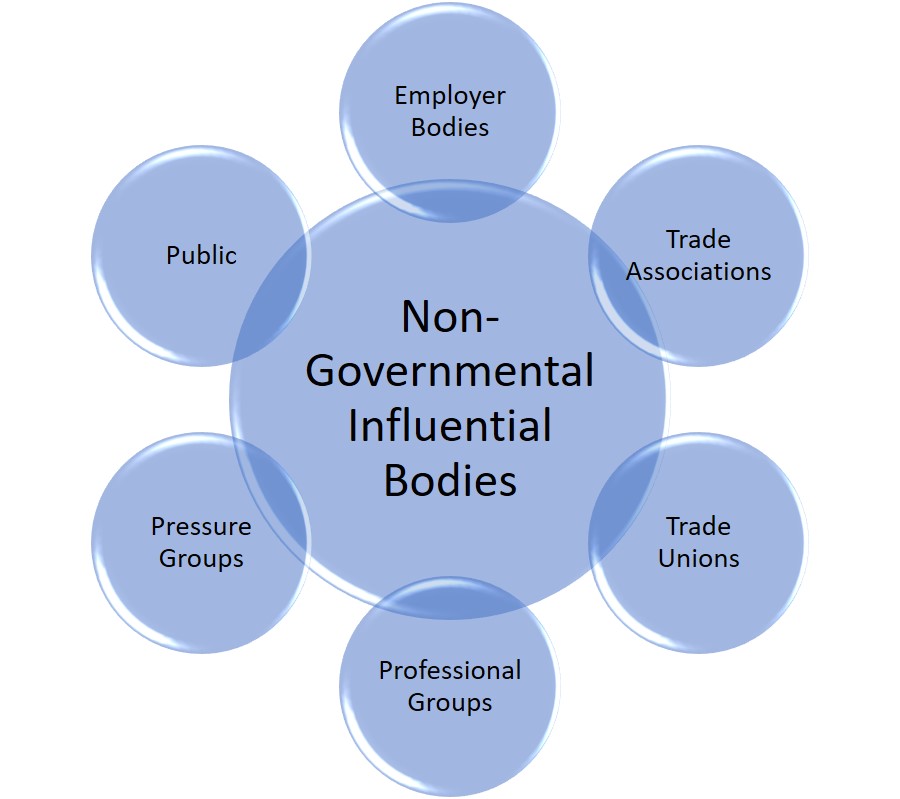
The above mentioned bodies along the media play an important role. Role of the print, broadcast, and social media has been discussed in the previous article that can be read here.
1. Employer Bodies
Such kind of organization consists of the employers or organizations to represent their interests. For example, in Pakistan Chamber of Commerce is established. Chamber of commerce helps in creating and sustaining the conditions in which businesses in the country can compete, grow and run smoothly in compliance of national regulations.
Similarly, in United Kingdom, Confederation of British Industry (CBI) is established to help industry in growing and sustaining business conditions.
Chamber of Commerce or Confederation of British Industry not only work on national level but they also work on international level where they introduce country and its product on international level and attract investment from other countries.
2. Trade Associations
Trade associations are found from a membership of the companies working in a particular area of commerce and exist for their own benefit. These organizations have ability to promote health, safety, environment standards through sharing and implementing guidelines, notes, information, codes of practice etc.
Meetings, workshops, and seminars can be arranged depending on an association's membership, both internationally and at a national/ regional level, to enable networking and the exchange of information and ideas, e.g., on technical and safety issues.
3. Trade Unions
Trade Union is an organization of the workers who work and put their interest in front of government, employer and other regulatory bodies. They work with employer too to achieve the common goals such as wage, hours and working conditions. Trade Unions negotiate with the employing body on behalf of the workers.
The negotiations include, wages, working hours, termination procedure, complain procedure, training and development, incident investigations etc.
4. Professional Groups
Professional Group is an organization or institute working in particular profession and have achieved a defined level of competence. To get membership of the organization, participants pay an amount of fee and enjoy multiple benefits in return. These benefits include guidance, training and development, information exchange as well as recognition on national and international level. Three main Professional groups have been mentioned below with little summary of introduction.
4.1 Institute of Occupational Safety & Health - IOSH
IOSH is a United Kingdom based organization and worldwide recognized as well. The organization is engaged in providing information, guidance, as well as other resources. IOSH covers more than 30,000 members across the globe and around 10,000 Chartered Safety & Health Practitioners across the globe. Its a not-for-profit and independent organization and accepted by International Labour Organization as a non-governmental organization.
4.2 American Society of Safety Engineers/Professionals - ASSE/ASSP
American Society of Safety Engineers/Professionals also known as ASSE/ASSP is an American based organization and world's oldest safety body, engaged in expanding the expertise of its members and providing information about Health and Safety at workplace. It also sets and implements Health and Safety standards.
4.3 Board of Certified Safety Professionals - BCSP
Board of Certified Safety Professionals (BCSP) a Peer Certification board. It is not providing any kind of membership or services provided by member organizations but it's prime responsibility is to provide training and certify professionals. There is always a need for certified and trained safety professionals as there are standards and laws require certified safety professionals.
5. Pressure Group
Pressure Group is an organization which has common interest but never put up candidates for election purpose. Pressure Groups are always engaged in raising the issues and pressuring the concerned parties to take action and resolve issues.
In terms of Safety and Health at work, these Pressure Groups pressurize the government to make legislation and implement safety and health laws. In other words, they lobby against the government and highlight the issues and make government to take remedial actions.
6. General Public
General Public never expects that their beloved one risk his/her life for the economical profit of the organization, he/she is working for. They want that their beloved ones are safe at workplace and organization is providing them with all resources needed to perform the job.

Saturday, July 17, 2021

Friday, July 16, 2021

Wednesday, July 14, 2021

Tuesday, July 13, 2021
Notes
July 13, 2021
Role of the Print, Broadcast, and Social Media in a Implementing Health and Safety at the Workplace

The media plays an important role in highlighting the issues on daily basis. Similarly here in Health and Safety, social media, print media, followed by Broadcast media can play an effective and important role in implementing health and safety standards at workplace and influence changes in attitude towards health and safety.
Types of Media
There are 3 types of media which include the following;
- Print Media e.g., Newspaper, Magazine, Leaflets, Books, Journals
- Broadcast Media e.g., Radio, Television
- Social Media e.g., Websites, Facebook, Instagram, Twitter, YouTube
- Ensuring Health and Safety guidelines are easily available with minimum cost. Agencies like OSHA (US), HSE (UK) provide guidance for all kind of activities being done by all kind of people, to comply with legal requirements. These guidelines are available in all kind of forms e.g., printed form and electronic form.
- With the help of the social media, print media, and broadcast media, major accidents/ incidents can be published and awareness can be spread. Not only this, prosecution and inquires can be published as well. Major disasters can be discussed publicly not only in the country where it origin. Through this, public can get awareness and effective controls can be adopted. Those who have been sentenced by government for negligence, their cases can be shared with public so that no one else repeat. Further, government and NGOs can use these media mediums to spread awareness through campaigns, programs and tv shows.
- Publish professional journals with the help of educational institutes and spread awareness.
- Those who have internet connection, must be able to access huge amount of information about health and safety without any cost.
The Media houses and platforms can change the attitude of public and employer by publishing;
- Legal Requirements and consequences of non-compliance
- Sharing duty holder's responsibilities imposed on him/her by government/ regulatory bodies
- Publication of good health and safety performance so that other organizations adopt same standards and improve their service quality, performance, and reputation.


 Posts
Posts

